Middle East Crisis Deepens as US-Israel and Iran Exchange Missile and Drone Attacks
Politics WorldPosted by vipulnaik on 2026-03-10 05:49:57 | Last Updated by vipulnaik on 2026-09-22 01:38:59
Share: Facebook | Twitter | Whatsapp | Linkedin Visits: 68
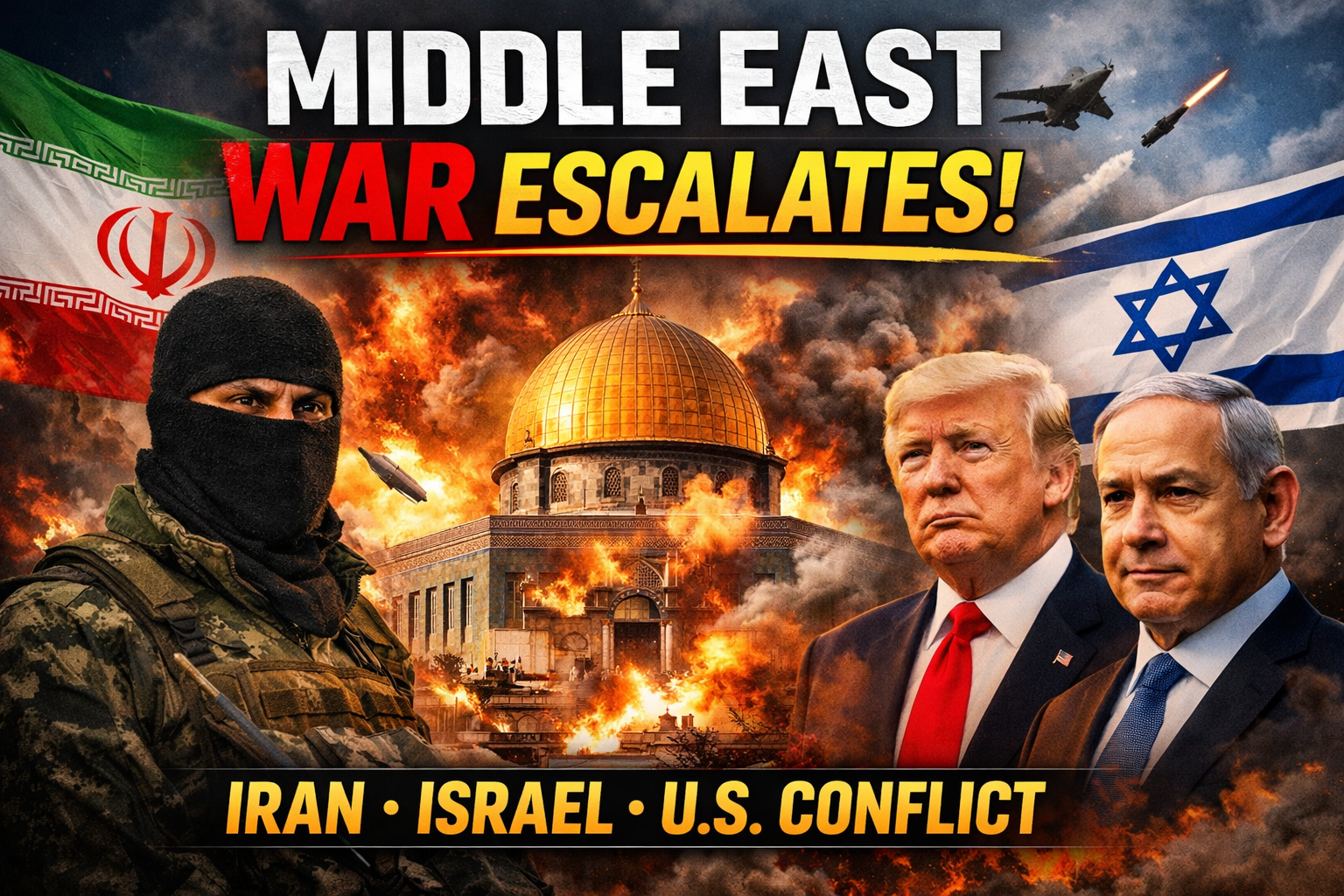
Tensions in the Middle East have sharply escalated as the conflict involving the United States, Israel, and Iran continues to intensify. Over the past several days, the region has witnessed missile strikes, drone attacks, and military operations that have raised serious concerns about the possibility of a broader regional war.
Military officials and political leaders around the world are closely monitoring the situation as the conflict spreads beyond its initial flashpoints.
How the Conflict Started
The crisis escalated when the United States and Israel launched coordinated airstrikes on several targets inside Iran. These strikes reportedly focused on military bases and infrastructure believed to be connected to Iran’s defense and missile programs.
According to military sources, the strikes were aimed at weakening Iran’s strategic capabilities and preventing further threats against Israeli territory and allied interests in the region.
However, the attacks triggered a strong response from Tehran, leading to a rapid escalation of hostilities.
Iran Responds with Missile and Drone Attacks
In retaliation, Iran launched several waves of ballistic missiles and armed drones targeting Israeli locations and American military facilities in the Middle East.
Air defense systems across Israel were activated as sirens sounded in multiple cities. Israeli defense forces intercepted several incoming missiles, although some explosions were reported in certain areas.
Iran also reportedly targeted American military bases and strategic facilities in Gulf countries, raising fears that the conflict could draw more nations into the war.
Conflict Expands Across the Region
What began as a confrontation between Israel and Iran has now started affecting other parts of the Middle East.
Armed groups believed to be aligned with Iran have launched attacks from neighboring countries such as Lebanon and Iraq. These attacks have included rocket launches and drone strikes against Israeli and Western targets.
In response, Israeli forces carried out airstrikes against positions linked to Hezbollah in southern Lebanon. Military analysts say these developments show how quickly the conflict could expand into a multi-front war.
Several explosions and military activities have also been reported across different locations in the Middle East, further increasing regional instability.
Gulf Countries on High Alert
Countries across the Gulf region have increased their security and defense readiness due to the rising threat of missile and drone attacks.
Nations including Saudi Arabia, Qatar, and the United Arab Emirates have reportedly strengthened their air defense systems to protect critical infrastructure and civilian areas.
Some governments have intercepted projectiles believed to have been launched from Iran or by groups allied with Tehran.
The ongoing tensions have also disrupted international air travel. Airlines operating in the Middle East have adjusted flight paths to avoid potential conflict zones, and several flights have been delayed or rerouted.
Political Leaders React
Global political leaders have started responding to the escalating crisis.
The Prime Minister of Israel, Benjamin Netanyahu, has stated that Israel will continue its military operations until it achieves its security objectives. He emphasized that the country is prepared to defend itself against any threat.
Meanwhile, Iran’s Supreme Leader Ali Khamenei has warned that Iran will respond strongly to any aggression and will protect its sovereignty.
Former US President Donald Trump has also commented on the conflict, warning that the crisis could have serious global consequences if it continues to escalate.
Global Economic Concerns
Experts are increasingly worried that the conflict could have a significant impact on the global economy.
The Middle East is a critical region for global oil supply, and any disruption could lead to rising energy prices worldwide. Financial markets have already begun reacting to the uncertainty created by the conflict.
Energy analysts warn that prolonged instability in the region could affect oil shipments passing through key waterways such as the Strait of Hormuz, one of the world’s most important oil transit routes.
Fear of a Larger War
International organizations and world leaders are calling for restraint to prevent the conflict from spiraling out of control.
Diplomatic efforts are underway to reduce tensions and encourage dialogue between the involved nations. However, continued missile exchanges and military strikes suggest that the situation remains extremely volatile.
Security experts say that if additional countries become directly involved, the conflict could transform into one of the largest regional wars in recent years.
For now, the world continues to watch closely as events unfold across the Middle East.