What Is a “Blood Moon” and Why It Happens — Explained
Jobs and Education SciencePosted by vipulnaik on 2026-03-09 06:14:09 |
Share: Facebook | Twitter | Whatsapp | Linkedin Visits: 82
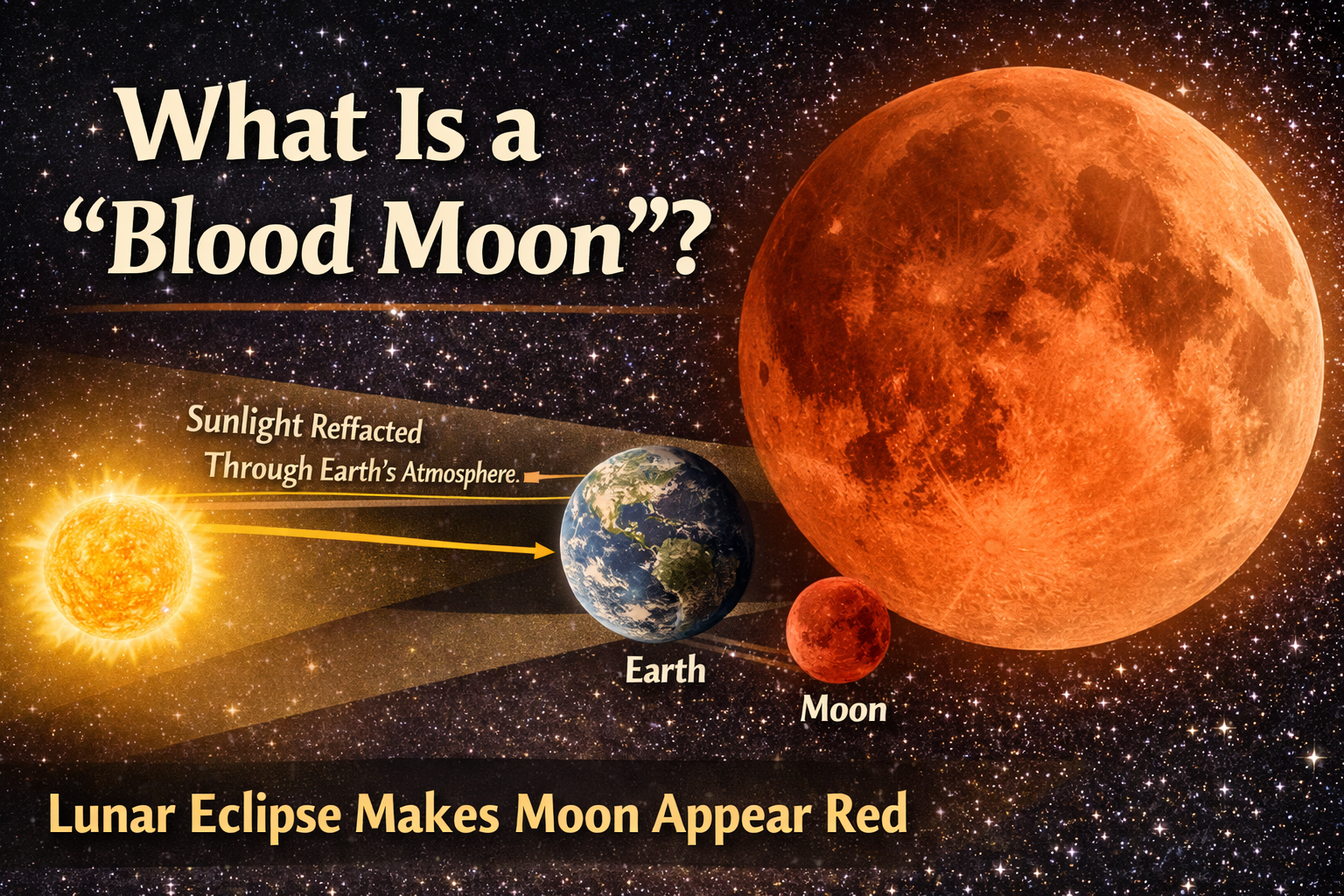
A “Blood Moon” is a popular name for a total lunar eclipse, an astronomical event that makes the Moon look reddish as it passes through Earth’s shadow. The term isn’t an official scientific label, but it’s widely used because of the striking colour the Moon takes on during totality. (Time and Date)
A total lunar eclipse occurs when the Earth sits directly between the Sun and the Moon, blocking most of the sunlight from directly reaching the Moon’s surface. Even so, some sunlight still reaches the Moon after being filtered and bent through Earth’s atmosphere. Because the atmosphere scatters shorter blue wavelengths and lets longer red wavelengths pass through (the same effect that makes sunsets appear red), the Moon glows in shades of red, orange, or copper during the eclipse — giving it the “Blood Moon” look. (Time and Date)
The article also explains that “Blood Moon” can refer to three different things:
A total lunar eclipse like the one happening on March 2–3, 2026.
A lunar tetrad — a series of four total lunar eclipses within about two years.
Traditionally, a full moon in October known by some cultures as the Hunter’s Moon or Harvest Moon. (Time and Date)